
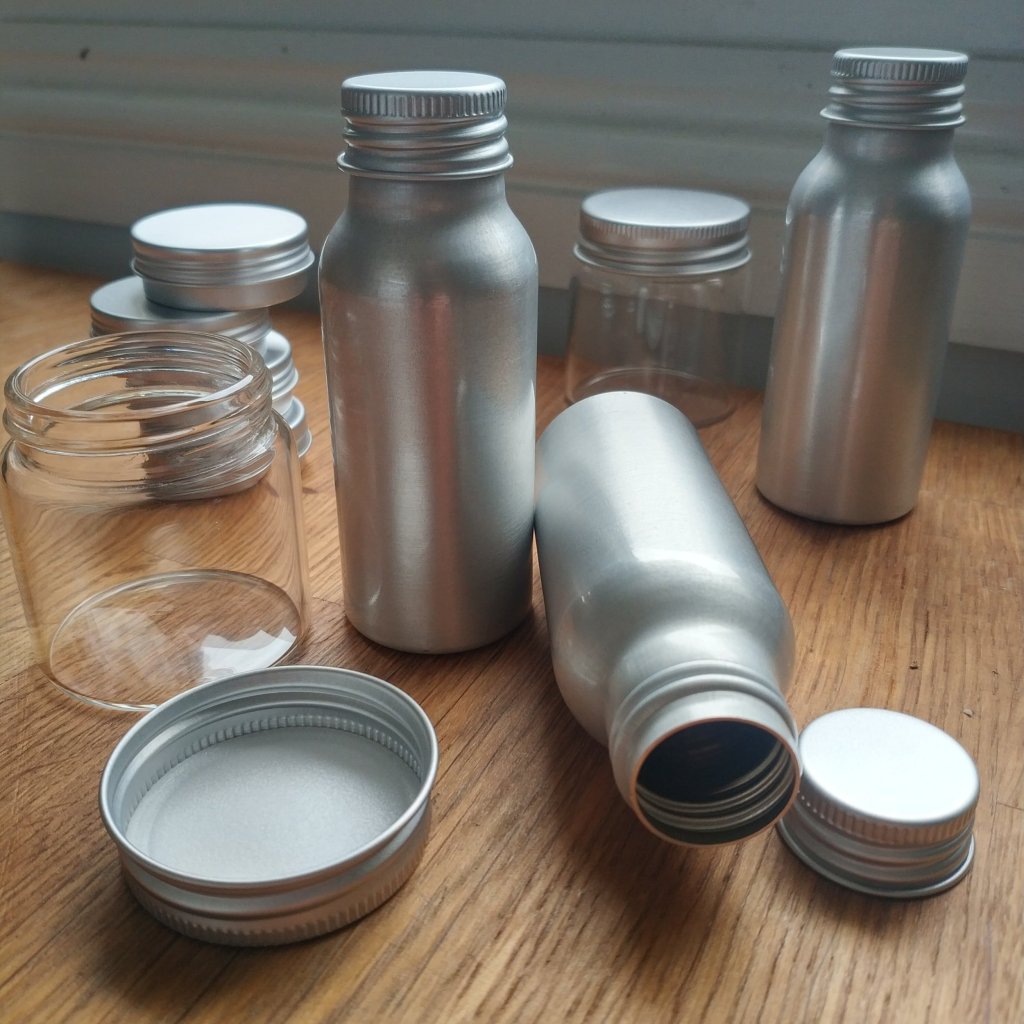
Some time ago I bumped into a BBC article about glass vs. plastic; which is better for the environment. After reading the story I was puzzled. Confused. In our best intentions have we got it all wrong? The article laid out some serious matters about the sustainability of glass production and recycling: larger environmental footprint than plastic and heavily energy intensive recycling process. I’m taking it seriously to keep the product packaging as sustainable as possible, but was it a mistake to choose glass? So I decided to sit down and investigate my options again with the eternal support of Google. I took also aluminium into my comparison as I use tins for all kinds of balms.
As with everything things are not so black and white. We need to consider several factors, including production, recycling, reuse, and overall environmental impact to determine the packaging material sustainability. Alas, let’s take a look of the sustainability considerations for glass, plastic and aluminium.

Glass
Glass is highly recyclable and reusable; it doesn’t loose any of the quality in the process. Glass provides great product protection due to its impermeability, and it does not leach any harmful chemicals. It is also a safe material for food and beverage packaging. The con is glass is heavier than aluminum and plastic, which increases transportation emissions and costs. The production process for glass requires also high energy consumption, emitting greenhouse gases. Lastly, we all know glass is fragile and prone to breakage, resulting in potential waste and safety hazards.

Aluminum
Just like glass, aluminum is highly recyclable and retains its quality throughout the recycling process. Aluminum provides excellent barrier properties and is lightweight, thus reducing transportation costs and emissions. It is also durable and resistant to breakage: nearly 75% of all aluminum ever produced is still in use today. Having said that, just like with glass aluminum production is energy-intensive, resulting in significant greenhouse gas emissions. The extraction of the source rock bauxite and refining of aluminum can have serious environmental impacts, and some aluminum packaging may have complex structures that make recycling more challenging.

Plastic
Plastic is truly a winner when it comes to versatility in design and functionality. Just like aluminum, plastic is lightweight, thus reducing transportation energy and costs.
Plastic recycling rates can be lower compared to the glass and aluminum as only certain plastic types can be recycled. Plastic waste is one of the major contributors of our time to environmental issues, such as pollution and long decomposition times. Some plastics can also leach harmful chemicals, and there are concerns about their impact on ecosystems and wildlife.
To synthesise, the sustainability of packaging materials depends on the entire life cycle, including production, use, and end-of-life management. In general, glass has advantages in terms of recyclability and reusability, while aluminum has benefits in terms of lightweight and recyclability. Plastic has advantages in terms of weight and versatility, but it faces many challenges with recycling and its environmental impact.
So, what is the most sustainable packaging material? There’s no single answer here as it depends on the application. Anyone who’s pondering the greenest option for their specific application should do a thorough assessment considering factors such as availability of recycling infrastructure, regional waste management systems, energy consumption, greenhouse gas emissions, and the potential for reducing overall environmental impact.
Summa summarum, I will stick to the glass and aluminum!
With love and lots of goodness of Mother Nature,
Lulu
 Casa De Luluel